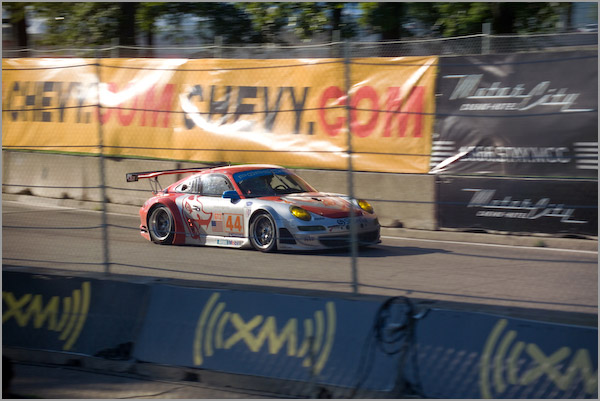
Ok, so I'm still getting the hang of panning
I could have used something like this in Africa. If it could stand heat and bright sun. And, I guess, assuming that Nikon had made any of its initial launch dates. This lens is a game-changer in Nikon telephoto zooms.
Context: Until now, your only option in the telephoto zoom range for low light use was one of the 80-200mm f/2.8s or the later 70-200mm f/2.8. With these lenses, you got one extra stop of light - in a huge, heavy package. And it was a very expensive package. Although their quality is amazing compared even to prime lenses designed in the 1970s, these full-size lenses were not (and are not) a solution for people who (a) have limited call for telephoto lenses or (b) want to limit the size and/or weight of their camera bags. Nikon has always had some f/4 lenses in the mix, like the original 70-210mm f/4 AF Nikkor, the 75-300mm f/4.5-5/6, the 80-400mm f/4.5-5.6, etc., but the smaller apertures meant that the amount of lighting was more important.
Image stabilization: This new (and optically recomputed) AF-s version of the 70-300mm solves most of the problem for most people: motion blur. The new 70-300mm has a superb image stabilization system that damps human movement. Although it can be a little bit nauseating to watch through the viewfinder, the pictures are undeniably sharp. If you have never taken a picture at 200mm and 1/15 of a second (handheld), you are in for a pleasant surprise. The system is best left on "auto" mode, rather than "active." It detects panning and shuts down as appropriate.
Optics: Very, very solid; this is what computerized lens design can do. People might complain that it's a little bit "soft" at 300mm, but having tested it, I found that it's very respectable. At infinity, the 300mm performance is about 90-95% of a Nikon 300mm prime lens (reference: 300mm f/4.5 ED-IF Ais). If you loved the AF-s 18-70mm f/3.5-4.5 or its fraternal twin the AF-s 24-85mm f/3.5-4.5, you will love this lens. Same acuity, same sharpness, same fast and accurate focusing (not quite as fast as the heavy pro AF-s lenses, but close enough for most subjects).
Other: People might complain about the plastic barrel. No problem, I say. If it makes it possible to make the lens smaller and lighter, it's great. This lens should not come apart under normal use.
Bottom line: Is it worth its $529 street price? Hell yes!